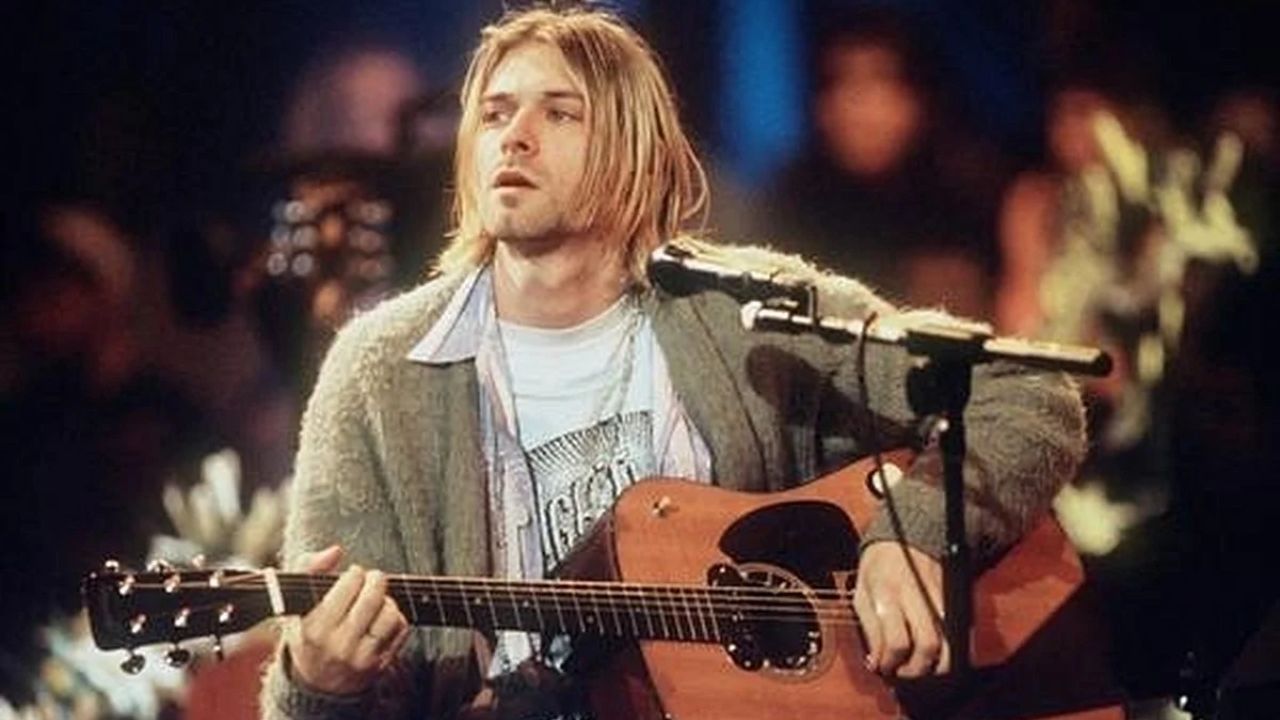
Three decades after his untimely demise, the official **Kurt Cobain death ruling** continues to cast a long shadow over the legacy of the Nirvana frontman. His death in April 1994, ruled a suicide by the King County Medical Examiner, remains a topic of intense discussion and speculation for fans and experts alike. Now, an unofficial team of forensic investigators has revisited the evidence, presenting a powerful new argument that directly clashes with the long-standing police conclusion, claiming Cobain's death was not a suicide but a homicide.
The Official Narrative: A Self-Inflicted Tragedy
On April 5, 1994, the music world stood still. News broke that Kurt Cobain, the iconic voice and tormented soul of Nirvana, had been found dead at his Seattle home. The discovery sent shockwaves globally, marking a tragic end to the life of a musician who had redefined a generation.
The King County Medical Examiner, after reviewing the evidence, concluded that Cobain died as a result of a self-inflicted shotgun wound. The weapon was identified as a Remington Model 11 20-gauge shotgun. The Seattle Police Department's investigation supported this finding, solidifying the narrative of a rock star succumbing to his inner demons.
For years, this official verdict has been the bedrock of public understanding. While conspiracy theories have always circulated among a segment of the fanbase, the official agencies have consistently stood by their initial findings, presenting a unified front that Cobain's death was a suicide.
Forensic Experts Challenge the Narrative: "This is a Homicide"
However, an independent team of forensic investigators, operating outside official channels, has recently cast significant doubt on this long-held conclusion. Spearheaded by forensic specialists Michelle Wilkins and Brian Burnett, who has prior experience with cases involving overdoses followed by gunshot trauma, the team undertook a meticulous re-examination of Cobain's autopsy results and crime scene materials.
Their findings, presented in a peer-reviewed paper, propose a radically different scenario. According to Wilkins, after just three days of reviewing the evidence, Burnett definitively stated, "This is a homicide. We've got to do something about this." This bold claim is rooted in a detailed analysis that suggests foul play and a deliberate attempt to stage the scene as a suicide.
The independent team's approach involved scrutinizing aspects of the case that they believe were either overlooked or misinterpreted in the initial investigation. Their work sheds new light on critical forensic markers and inconsistencies, pushing for a re-evaluation of the entire Kurt Cobain death ruling.
Discrepancies in Autopsy Findings: A Medical Mystery
At the heart of the new challenge lie critical discrepancies identified within Cobain's original autopsy report. The forensic team believes these findings align more closely with a heroin overdose than with a rapid, fatal gunshot wound. They cite several key indicators:
- Necrosis of the Brain and Liver: Wilkins specifically highlights necrosis (tissue death) in Cobain's brain and liver. She emphasizes, "The necrosis of the brain and liver happens in an overdose. It doesn’t happen in a shotgun death." This suggests that Cobain's organs were undergoing a process typically associated with prolonged oxygen deprivation or drug toxicity, not instantaneous death from a massive head injury.
- Fluid in the Lungs: The presence of fluid in the lungs, another finding in the autopsy, is often indicative of pulmonary edema, a common complication of severe opioid overdose.
- Hemorrhaging in the Eyes: Petechial hemorrhages (tiny blood spots) in the eyes can be a sign of asphyxia or significant physiological distress before death, again pointing away from an immediate shotgun death.
"There are things in the autopsy that go, well, wait, this person didn’t die very quickly of a gunshot blast," Wilkins remarked. These medical observations form a crucial part of the homicide theory, suggesting that Cobain was incapacitated by a heroin overdose and therefore likely unable to pull the trigger himself.
The Staged Scene and Questionable Suicide Note
Beyond the biological evidence, the independent investigators point to several puzzling aspects of the crime scene itself:
- The "Very Clean" Scene: The team found the crime scene surprisingly pristine. "To me, it looks like someone staged a movie and wanted you to be absolutely certain this was a suicide," Wilkins stated, expressing skepticism about the lack of struggle or disarray often associated with violent death.
- Positioning of the Shotgun and Casings: Questions have been raised regarding the final resting place of the shotgun and the shell casings. If Cobain had fired the weapon, the positioning of these items, according to the forensic team, appears inconsistent with a self-inflicted wound.
- Discrepancies in Handwriting: The suicide note found at the scene has also come under renewed scrutiny. The experts claim to have identified discrepancies in the handwriting across different lines of the note, suggesting that parts of it may have been forged or added by another party. This crucial piece of evidence, long considered definitive proof of suicide, is now being questioned as a potential component of a cover-up.
These combined elements of the scene, if accurately interpreted, paint a picture of deliberate manipulation rather than a straightforward suicide, adding significant weight to the call for a re-examination of the Kurt Cobain death ruling.
The Homicide Theory Unpacked: A Calculated Act
The forensic team's theory outlines a chilling sequence of events: they allege that Kurt Cobain was confronted by one or more assailants who first forced him into a heroin overdose to incapacitate him. Once he was rendered helpless, one of them then shot him in the head. To conceal the true nature of the death, the perpetrators are believed to have then carefully staged the scene:
- Placing the shotgun in his hand to suggest self-infliction.
- Putting the receipt for the weapon and shells into his pocket to reinforce the idea of a premeditated purchase.
- Forging or altering the suicide note to leave a clear message of self-harm.
This theory directly addresses the discrepancies identified in both the autopsy report and the crime scene analysis, providing a coherent, albeit disturbing, alternative to the long-accepted suicide narrative. It suggests a level of planning and execution that contradicts the official findings of a spontaneous act of self-violence.
Official Response and Future Prospects: A Closed Case?
Despite these compelling new assertions and the comprehensive forensic review, the likelihood of a formal re-examination of **Kurt Cobain's death ruling** by official authorities appears slim. Spokespeople for both the Seattle Police Department and the King County Medical Examiner’s Office have addressed the report, stating unequivocally that there is "no new evidence to reopen the case" and that "the investigation results remain unchanged."
This steadfast refusal to revisit the case underscores the inherent challenges of overturning a decades-old official ruling, particularly when the initial investigation concluded with what was deemed a definitive outcome. For independent investigators and a significant portion of the public, this stance is frustrating, perpetuating the sense of an unresolved mystery. It highlights the often-difficult path for new evidence, particularly from unofficial sources, to prompt a re-evaluation of cold cases, regardless of its perceived merits.
The enduring questions surrounding Kurt Cobain's death underscore the profound impact he had on music and culture. His tragic end at 27 years old cemented his status as a legendary, yet ultimately enigmatic, figure. The ongoing debate about his Kurt Cobain death ruling speaks volumes about the human need for closure and the desire to understand the full truth, especially when it concerns an icon whose life ended under such tragic circumstances.
Conclusion
Three decades after his death, the official **Kurt Cobain death ruling** as a suicide is being fiercely challenged by independent forensic experts who present a compelling case for homicide. Citing critical discrepancies in autopsy findings that suggest an overdose before a gunshot, alongside inconsistencies in the crime scene and the alleged suicide note, specialists like Michelle Wilkins and Brian Burnett argue for a staged event. While their detailed review offers a provocative alternative theory, official channels, including the Seattle Police Department and the King County Medical Examiner's Office, maintain there is no new evidence to reopen the case. This stark contrast ensures that for many, the final chapter of Kurt Cobain's life remains open to interpretation, fueled by an enduring quest for definitive answers.